

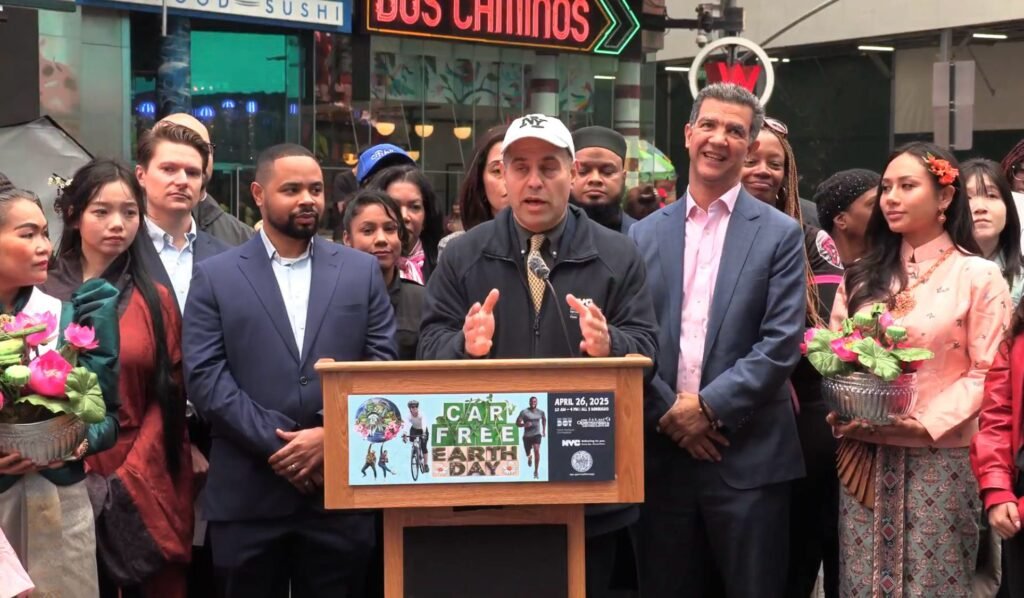
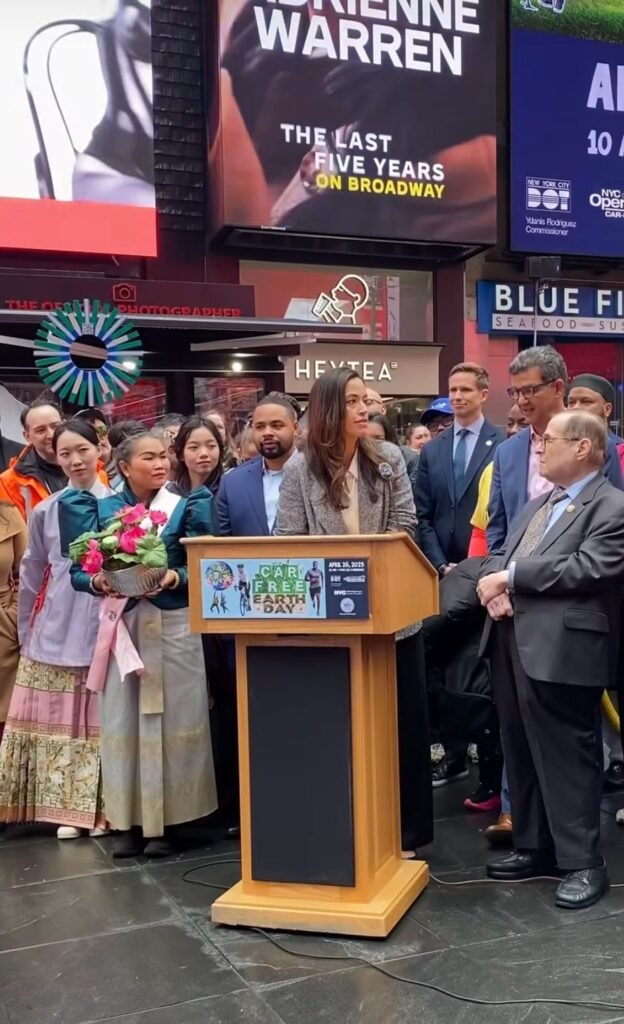
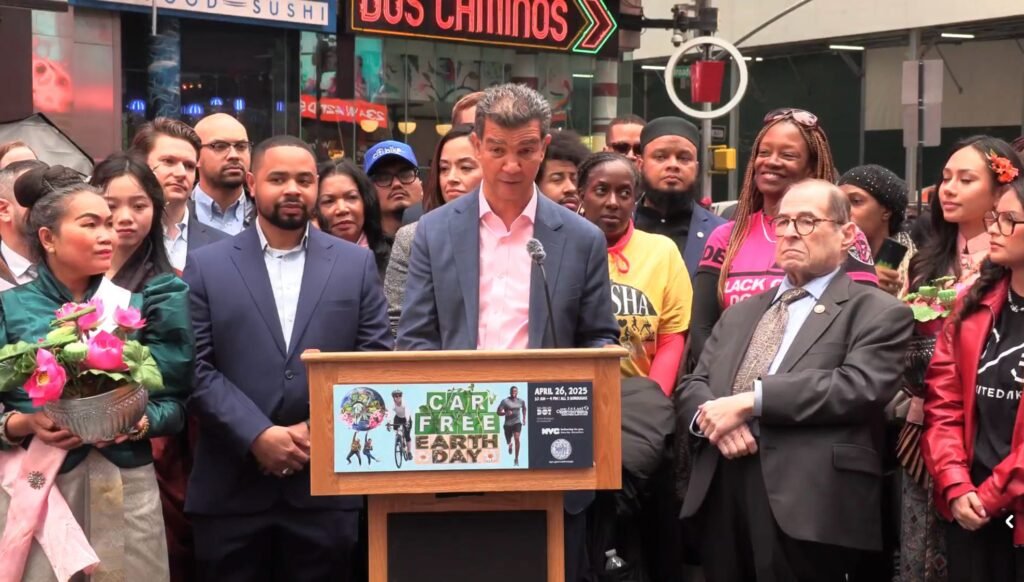
New Yorkers came together in a vibrant display of community spirit and environmental consciousness as the city hosted its largest-ever Car-Free Earth Day on Saturday, April 26. With 54 streets and plazas across all five boroughs transformed into car-free zones, the event marked a bold step forward in New York City’s commitment to sustainable urban living.
Led by the New York City Department of Transportation (NYC DOT), the event kicked off the Open Streets season and celebrated the 55th anniversary of Earth Day. From midtown Manhattan to the neighborhoods of Brooklyn, Queens, the Bronx, and Staten Island, residents stepped out to walk, bike, and enjoy streets filled not with vehicles but with music, art, and community life.

“Car-Free Earth Day is a chance for New Yorkers to enjoy our city’s world-class streetscapes as open spaces for all,” said NYC DOT Commissioner Ydanis Rodriguez. “We must all do our part to reduce our carbon footprint and respect our environment.”
Signature locations included a stretch of Broadway from 17th to 46th Street, Dyckman Street in upper Manhattan, Woodside Avenue in Queens, Brooklyn’s 5th Avenue from 40th to 50th Street, and expanded routes in the Bronx and Staten Island. Many of these spaces featured live performances, environmental education, and public art installations that engaged residents of all ages.
Among the standout artistic features was Branching, a whimsical illustration honoring New York City’s oldest trees, created by illustrator Ishita Jain. The image was displayed on over 300 JCDecaux bus shelters citywide. In addition, sculptural works like Asphalt Asters by Molly Gambardella, crafted from repurposed plastic bags, and Rising. Curtain. by Anjali Deshmukh and Ernest Verrett, a beaded curtain mapping global temperature change, offered powerful visual commentaries on the climate crisis.


Citi Bike, through a partnership with Lyft, also joined the movement by offering free 24-hour day passes, encouraging residents to try biking as an eco-friendly mode of transportation. “Bikeshare programs like Citi Bike are a powerful tool to help cities reduce carbon emissions,” said Citi Bike General Manager Patrick Knoth.
Elected officials and community leaders praised the event’s expansion and its lasting impact. “This Car-Free Earth Day is an excellent reminder to enjoy our city sustainably,” said Deputy Mayor Jeff Roth. Brooklyn Borough President Antonio Reynoso added, “It’s about reclaiming our streets to create a safe space to build community, culture, and joy.”
For many, the event was more than just symbolic. It represented a tangible shift toward a people-first cityscape—one where residents are prioritized over private vehicle traffic. Local advocacy groups like Transportation Alternatives and Open Plans emphasized the economic, environmental, and social benefits of pedestrian-friendly streets. Bike New York contributed by offering free Learn to Ride classes and bike repairs, making cycling more accessible to everyone.
The inclusive spirit of the day was also evident in the community-led programming at various locations. In Jackson Heights, Queens, the gold-standard 34th Avenue Paseo Park served as a model for how open streets can transform neighborhoods. On Staten Island, families enjoyed games and performances along an extended route on Port Richmond Avenue.
State Senator Robert Jackson noted that car-free events help “signal our city’s bold commitment to healthier neighborhoods and a sustainable future.” Meanwhile, Manhattan Borough President Mark Levine encouraged residents to “take a free Citi Bike ride and check out the public art and community programming,” calling it a celebration of public space and a call to action for climate resilience.

As the warm season begins, the success of Car-Free Earth Day sets a hopeful tone for future public space programming. By turning streets into hubs of culture, sustainability, and togetherness, New York City continues to lead by example showing what’s possible when a metropolis prioritizes people over cars. With momentum building from this event, and more Open Streets programming planned for the months ahead, New Yorkers are poised to embrace a greener, more connected city, one step and one pedal stroke at a time.
For more blogs, visit : NYN PRESS